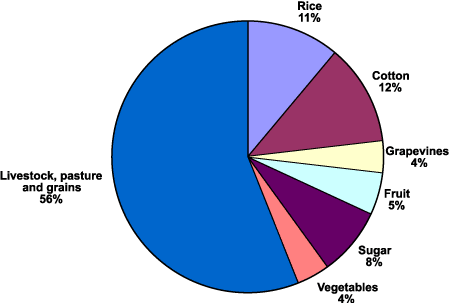
The Murray Darling Basin lies across four states and has an unpredictable source of water. The Murray- Darling Basin has a variety of water uses. Water uses include agriculture, public water usage, recreation and many more other uses.
Australia’s most important agriculture region, the Murray-Darling Basin, produces 40% of all Australian farms, whose products include wool, cotton, wheat, sheep, cattle, dairy produce, rice, oil-seed, wine, fruit and vegetables for both domestic and overseas markets. The basin produces one third of Australia’s food supply, while also supporting over a third of Australia’s total gross value of agriculture production. The Basin has also been involved in three quarters of Australia’s irrigated crops and pastures. The Murray-Darling Basin is such a significant place of cultural heritage for all Australians and includes many important natural heritage features. As agricultural production is so necessary for the Australian economy, our Murray-Darling Basin plays a vital role.The Basin has a much more important resource than anything else, water. The water in the Murray-Darling river systems produces a very small percentage of water from the Basin area. The water mainly comes from along the southern and eastern rim of the Basin. Most of the water doesn’t contribute to the water usage, as 86% of the vast catchment area has little or no regular run-off to rivers. The area covers many cities, as over two million people work on the Basin. These cities, some rural and urban, are Toowoomba, Bendigo, Albury, Wodonga, Tamworth, Dubbo, Orange, Wagga Wagga, Queanbeyan and Shepparton.
